
“When children are given the opportunity to learn, play, and be heard, they become powerful agents of change in their communities.”
For many children in Kilifi County, the Day of the African Child was not just another date on the calendar. It was a week filled with conversations, laughter, learning, mentorship, and opportunities that reminded them that they matter.
The celebrations began on June 16, 2026, at Kauma in Ganze Sub-County, where hundreds of children, government officials, civil society organizations, and community members gathered to commemorate the Day of the African Child under the theme: “Ensuring Universal Access to Water, Sanitation and Hygiene for Every Child in Africa.”
As speakers highlighted the importance of children’s rights and wellbeing, the message was clear: every child deserves a safe environment, quality services, and the opportunity to thrive.
But for Tuungane CBO, the celebration extended far beyond a single day.
Listening to Communities
Across Mnarani, Tezo, Kibarani, Shela, and Ganda wards, over 100 community members came together through a series of town hall forums organized under the Toolkit Organizers Initiative in partnership with nine other organizations and supported by Peace Brigades International-Kenya Project.
Parents, youth, local leaders, and caregivers openly discussed the challenges affecting children today.
“Our children are carrying pressures that many of us do not see,” shared one parent during the Mnarani town hall. “Between school expectations, peer influence, and challenges at home, they need adults who are willing to listen.”
The discussions touched on school unrest, academic pressure, mental health, and the need for stronger communication between schools, parents, and learners.
A local community leader from Tezo emphasized the importance of collective action.
“Protecting children is not the responsibility of parents alone. It requires all of us—teachers, leaders, government, and the community—to create environments where children feel safe, valued, and supported.”
These conversations reminded everyone that children’s rights are best protected when communities work together.
A Day Filled With Play, Learning and Joy
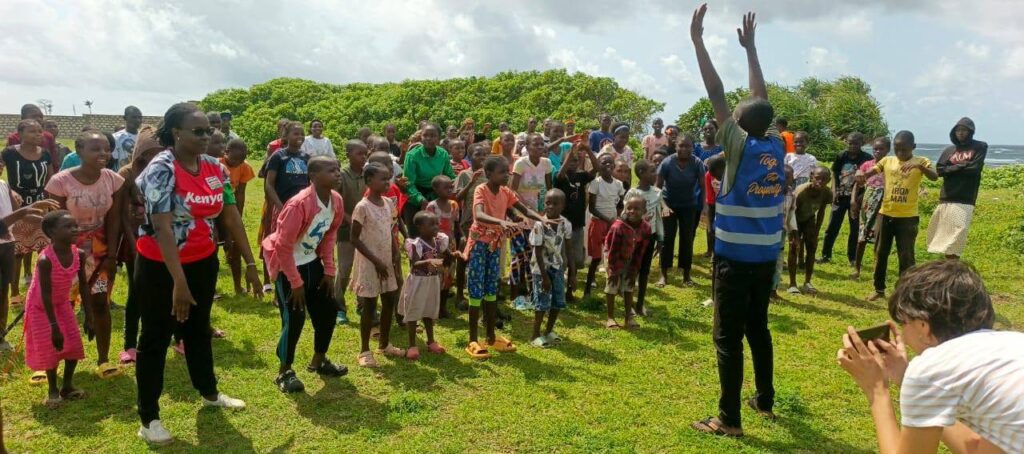
A few days later, the spirit of the celebrations continued at Nyota Ya Asubuhi in Kilifi, where young people gathered for football, handball, kickboxing, mentorship sessions, and recreational activities.
The field was alive with excitement as children cheered, played, and encouraged one another.
For 13-year-old Amina, the football games were the highlight of the day.
“I made new friends today and learned that girls can play football just as well as boys,” she said with a smile after one of the matches.
Beyond the games, young people participated in mentorship sessions that addressed important life skills. Boys discussed personal responsibility and hygiene, while girls learned about menstrual health and management.
Volunteer Diana Abucheli, who participated in the event, reflected on the impact of the mentorship sessions.
“What stood out for me was the confidence the girls showed when discussing menstrual health. Many of them asked thoughtful questions and openly shared their experiences. Creating these safe spaces helps young people realize that they are not alone and that there is nothing to be ashamed of.”
For younger children under the age of 12, learning happened through fun and interactive activities focused on handwashing, personal hygiene, and environmental conservation.
“The children were eager to participate and learn,” Diana added. “You could see how excited they were to discover simple ways they can protect their health and care for the environment.”
When Sports Become a Pathway to Opportunity
The celebrations also extended to the Super 8 Ladies Cup held at Shanzu TTC in Mombasa, where women’s football took center stage.
For many spectators, it was a football tournament. For the young women from Tuungane’s Youth Voice and Empowerment Project, it was an opportunity to dream bigger.
Watching women compete with confidence and determination inspired many participants to imagine new possibilities for themselves.
Ann Mwangi, who accompanied the young women to the tournament, described the experience as transformational.
“The tournament was about much more than football. The girls interacted with players, coaches, and leaders who showed them what is possible when you pursue your passion with commitment. Some of them left talking about careers they had never considered before.”
For Janet Motah, the event demonstrated the power of sports as a tool for empowerment.
“Sports create opportunities that go far beyond the pitch. They build confidence, leadership, teamwork, and resilience. Seeing young women engage with role models and learn from their journeys was one of the most rewarding parts of the tournament.”
Throughout the weekend, participants networked, asked questions, and gained exposure to pathways that can support their future personal and professional growth.
Looking Beyond the Celebration
As the Day of the African Child celebrations came to an end, one message remained consistent across every activity: children and young people flourish when they are supported, listened to, and empowered.
Whether through community dialogue, mentorship, play, or sports, every activity created opportunities for learning, growth, and connection.
We believe that investing in children means investing in the future. By creating safe spaces where young people can learn, express themselves, and discover their potential, we are helping build communities where every child has the opportunity to thrive.
Because every child deserves more than a celebration. They deserve a future filled with possibility.